Fill out the form below and a consultant will contact you as soon as possible.

Intumescent Coating vs NUTEC Protective Concepts Removable Insulation Jackets
Protect your equipment — without the usual hassle
Book a free technical call
Side-by-side comparison: Intumescent Coating vs Removable Insulation Jackets
Installation
Maintenance access
Reusable
Moisture resistance
Customization
Fire protection
Long-term cost
Intumescent Coating
Multi-step: surface prep, several layers, drying time
Requires removal or reapplication for inspection
No — one-time use only
Can absorb moisture and deteriorate over time
General coverage, not tailored
Effective if applied correctly
Higher due to frequent maintenance and rework
Removable Insulation Jackets
Quick wrap-around install — no downtime needed
Easy to remove and reattach without damage
Yes — fully reusable and long-lasting
Water-resistant and ideal for harsh environments
Custom-built for each valve, flange, or component
Proven in jet fire and hydrocarbon fire testing
Lower thanks to durability and operational flexibility
Why are more engineers switching to removable jackets?
Because they offer solid protection without locking you out of your own equipment. No drying times, no rework after inspections, no unexpected shutdowns. Just efficient, flexible thermal protection you can count on.
One thing worth noting
Coatings can work — until you need to open up what’s underneath.
With NUTEC Protective Concepts jackets, you get protection that also respects your maintenance schedule.
TDI KMASS vs NUTEC Protective Concepts Jackets
While TDI KMASS sets the standard for intumescent coatings for fire protection, NUTEC Protective Concepts jackets offer a flexible, removable alternative — ideal for plants that require easy access, repeat maintenance, or reconfiguration.
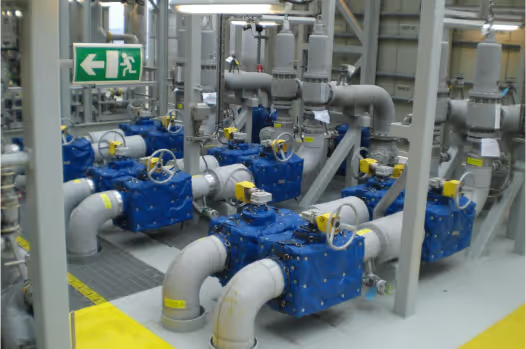
Why ProSol™ PFP Outperforms Intumescent Coating Systems?
Proven Chemical Resistance
ProSol™ Jackets maintain their integrity when exposed to harsh industrial environments. They are unaffected by common chemicals such as:
Kerosene
Diesel fuel
General acids
Jet fuels
By comparison, many traditional coatings can degrade over time when exposed to these agents, reducing their protective performance and reliability.
Designed for New and Existing Equipment
Whether applied to new systems or retrofitted into existing infrastructure, ProSol™ Jackets offer full adaptability:
Custom-designed using advanced 3D scanning and modeling and CAD software.
No disassembly, surface prep, or offsite handling required
Quick, efficient installation with minimal disruption
Coating systems require equipment to be shipped to the manufacturer for application and subsequent reassembly, which results in additional cost and extended lead times.
Inspection and Maintenance, Simplified
With ProSol™ Jackets, accessibility is built in:
Jackets can be removed and reinstalled in minutes, without tools
No sanding, patching, or recoating required
Enables direct visual access for inspection and servicing
Coatings are permanent by nature, complicating routine maintenance and increasing turnaround times.
Engineered for Harsh Environments
ProSol™ Jackets are built to endure the realities of industrial operation:
Weather-resistant; will not crack, flake, or delaminate
Ventilated designs reduce the risk of CUI (Corrosion Under Insulation) and CUF (Corrosion Under Fireproofing)
In case of damage, jackets can be quickly removed, repaired, and reinstalled
In contrast, coatings—once damaged—require complete removal and full reapplication.
Lower Total Cost of Ownership
ProSol™ Jackets provide long-term value by minimizing both installation and lifecycle costs:
Lower upfront installation expense
No maintenance-related costs
Reduced downtime during inspection or repair
Coating systems typically involve higher labor costs, application complexity, and maintenance cycles over time.
Certified to Critical Standards
Unlike many intumescent coatings for fire protection or epoxy coating systems, ProSol™ Jackets are:
Tested and certified to UL1709, Jet Blast Fire and Overpressure Fire testing by Lloyds, DNV and ABS. This translates into greater compliance, operational safety, and proven performance in high-risk environments.
ProSol™ PFP: Engineered to protect. Designed for the realities of industrial operation
Download Our Brochure of our Removable insulation jackets
NUTEC Protective Concepts custom insulation jackets are lightweight, weather-resistant, and durable, ensuring easy installation and removal. Designed for removable insulation jackets, they provide quick access to equipment for maintenance, inspection, and operation, making them a user-friendly solution for critical infrastructure.

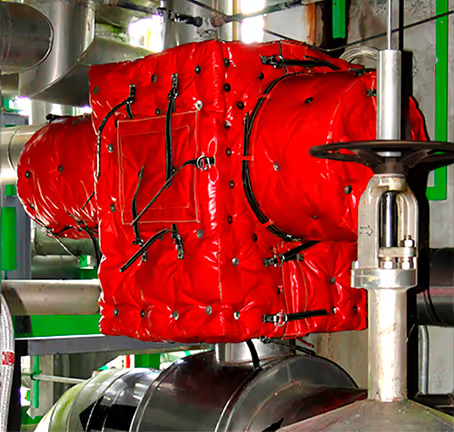
We provide high quality custom insulation jackets engineered to meet the toughest industrial standards. Designed for performance, reliability, and ease of use, our PFP jackets are the best solution for protecting your equipment in extreme conditions.
User friendly installation and removal.
Lightweight.
Shorter lead times compared to our competition.
Customized fit and colors.
Maintenance accessible.
Customized to customer's branding.
30-180 minute fire rating.
UL-1709 certified.
Jet blast and hydrocarbon fire certified.
Weather resistant.
Frequently Asked Questions About Intumescent Coating for Fire Protection

What is an intumescent coating for fire protection?
An intumescent coating is a type of passive fire protection. It is applied in thin layers to materials such as steel, wood, drywall or concrete and blend flawlessly into existing architecture while supporting structural integrity and personal safety in the case of a devastating fire.
When the intumescent coating is exposed to heat or flames, it quickly expands and forms a char that reduces the transfer of heat from the fire to the underlying substrate, thereby acting as an insulating layer and delaying the time it takes for the structure to fail.
Intumescent coatings are widely used in environments where fire protection is critical, including industrial facilities, oil and gas installations, offshore structures, and commercial buildings. They are commonly specified to help meet required fire ratings and comply with safety regulations. To perform as intended, these coatings depend on proper surface preparation, correct application by trained personnel, and ongoing inspection and maintenance to ensure durability over time.
When the intumescent coating is exposed to heat or flames, it quickly expands and forms a char that reduces the transfer of heat from the fire to the underlying substrate, thereby acting as an insulating layer and delaying the time it takes for the structure to fail.
Intumescent coatings are widely used in environments where fire protection is critical, including industrial facilities, oil and gas installations, offshore structures, and commercial buildings. They are commonly specified to help meet required fire ratings and comply with safety regulations. To perform as intended, these coatings depend on proper surface preparation, correct application by trained personnel, and ongoing inspection and maintenance to ensure durability over time.
How do intumescent coatings work for fire protection?
Intumescent coating is formulated for fire protection. When subjected to a certain temperature, typically around 392–482°F (200–250°C), the coating undergoes the process of sublimation, which is when the coating rapidly expands up to 50 times its original thickness.
Its original thickness results in a stable, carbonaceous char layer. This char functions as insulation, creating a barrier between the flames and the underlying substrate to slow down the transfer of heat.
By delaying structural failure, intumescent coatings provide critical time for evacuation and firefighting response. However, once activated, the coating cannot revert to its original form, meaning reapplication is required after exposure to fire or high heat.
Its original thickness results in a stable, carbonaceous char layer. This char functions as insulation, creating a barrier between the flames and the underlying substrate to slow down the transfer of heat.
By delaying structural failure, intumescent coatings provide critical time for evacuation and firefighting response. However, once activated, the coating cannot revert to its original form, meaning reapplication is required after exposure to fire or high heat.
What are the disadvantages of intumescent coating for fire protection?
Intumescent coatings provide effective passive fire protection but have significant disadvantages, including:
- High maintenance needs: Intumescent coatings require regular inspection and reapplication as they can crack, flake, or lose adhesion over time, particularly in outdoor, humid, or corrosive environments.
- Difficult to repair: Once damaged or exposed to fire, the coating cannot be reused and must be completely removed and reapplied.
- Limited reusability: Intumescent coatings have limited reusability and are single-use systems, making it difficult to access equipment for maintenance.
- Environmental and cost impact: Reapplication leads to material waste, surface preparation, and downtime, which increases maintenance costs and decreases sustainability.
Are removable insulation jackets reusable after maintenance vs intumescent coating for fire protection?
Removable insulation jackets provide easy access to equipment for maintenance, inspection, and operation due to their reusable design. In contrast, intumescent coatings do not offer this convenience.
Removable jackets protect critical components from extreme temperatures, environmental exposure, and fire risks. In contrast, intumescent coatings require reapplication when removed, damaged, or exposed to high heat, which involves surface preparation, drying time, and labor costs. Thus, insulation jackets are a more practical and cost-effective choice for equipment needing frequent access or maintenance.
Removable jackets protect critical components from extreme temperatures, environmental exposure, and fire risks. In contrast, intumescent coatings require reapplication when removed, damaged, or exposed to high heat, which involves surface preparation, drying time, and labor costs. Thus, insulation jackets are a more practical and cost-effective choice for equipment needing frequent access or maintenance.
How does the durability compare between insulation jackets and intumescent coatings for fire protection?
Insulation jackets and intumescent coatings offer different advantages in terms of durability, depending on the application environment.
Removable insulation jackets offer superior durability in harsh industrial environments, thanks to robust outer layers like fiberglass, silicone, or PTFE.
On the other hand, intumescent coatings are more prone to deterioration. Coatings can crack, flake, or lose adhesion due to UV exposure, corrosion, and physical impact, often requiring extensive surface repair. In contrast, insulation jackets resist mechanical damage and moisture, and because they can be easily cleaned and reused, they represent a more cost-effective long-term solution.
Removable insulation jackets offer superior durability in harsh industrial environments, thanks to robust outer layers like fiberglass, silicone, or PTFE.
On the other hand, intumescent coatings are more prone to deterioration. Coatings can crack, flake, or lose adhesion due to UV exposure, corrosion, and physical impact, often requiring extensive surface repair. In contrast, insulation jackets resist mechanical damage and moisture, and because they can be easily cleaned and reused, they represent a more cost-effective long-term solution.
What industries prefer insulation jackets over intumescent coatings for fire protection?
Industries that require frequent maintenance, inspection, or access to equipment, such as oil and gas, petrochemicals, power generation, and marine, typically prefer removable insulation jackets instead of intumescent coatings.
These sectors face harsh conditions with high temperatures, vibrations, and corrosion. Removable insulation jackets allow quick access to valves, flanges, and fittings without damaging the insulation, reducing downtime and maintenance costs.
In contrast, intumescent coatings are more suitable for static structural components where access is limited. In contrast, reusable insulation jackets offer a more flexible, durable, and cost-effective thermal and fire protection solution for process equipment and rotating machinery.
These sectors face harsh conditions with high temperatures, vibrations, and corrosion. Removable insulation jackets allow quick access to valves, flanges, and fittings without damaging the insulation, reducing downtime and maintenance costs.
In contrast, intumescent coatings are more suitable for static structural components where access is limited. In contrast, reusable insulation jackets offer a more flexible, durable, and cost-effective thermal and fire protection solution for process equipment and rotating machinery.
This is NUTEC Protective Concepts
Leading Supplier of Certified Passive Fire Protection Solutions in North America
NUTEC Protective Concepts was established in 2021 following the acquisition of Protective Concepts, Inc., which was founded in 1986. Operating as a wholly owned subsidiary of NUTEC Inc., a North Carolina-based manufacturer of high-temperature insulation and fire protection products, NUTEC Protective Concepts has become a leading supplier of certified passive fire protection solutions. We take pride in our ability to offer customized designs and installations for both onshore and offshore applications worldwide. Our commitment to quality is reflected in our collaborative approach with customers, tailoring solutions to meet the most demanding environments. All of our passive fire protection products are fully certified through rigorous fire testing.