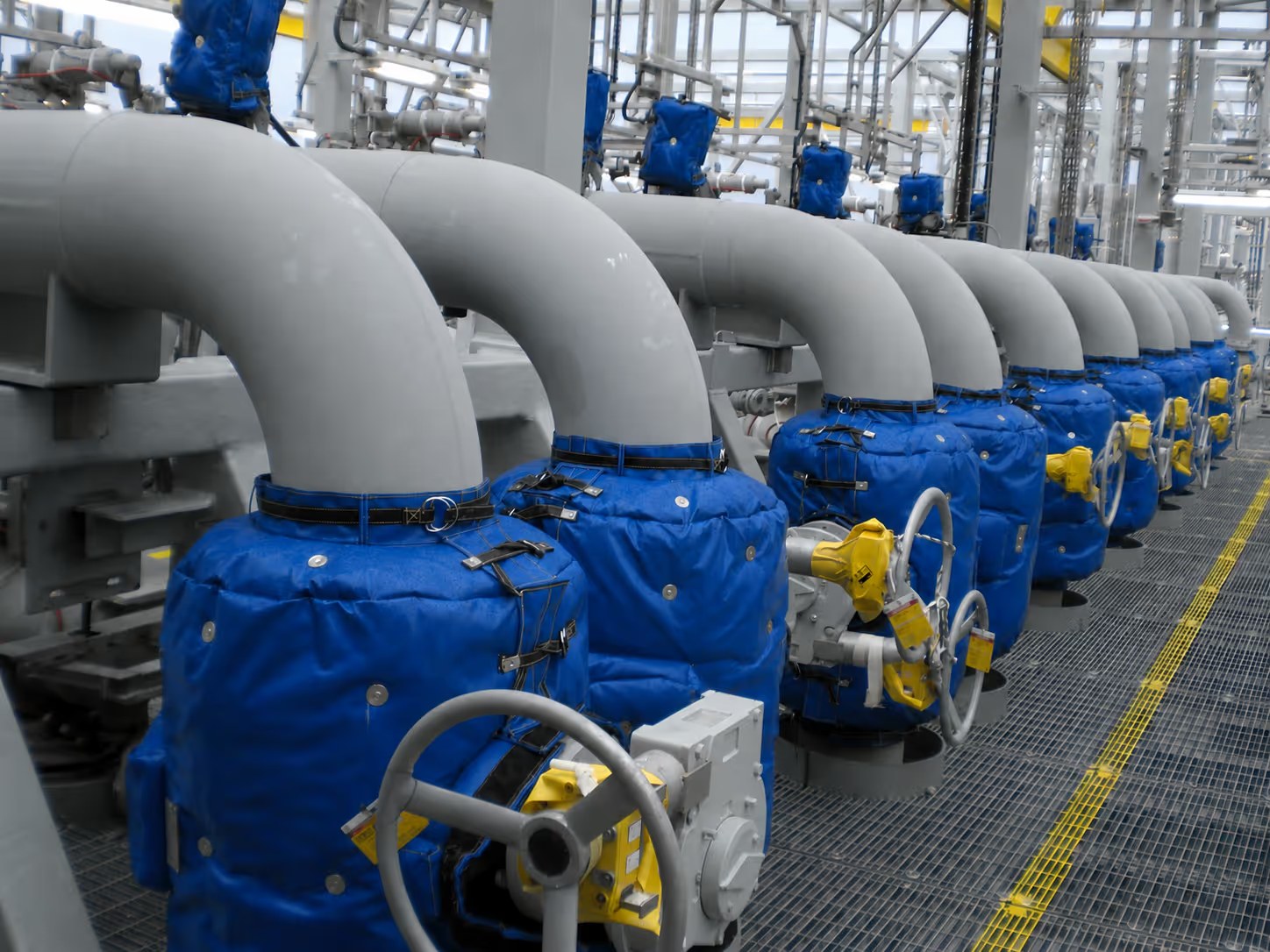
The petrochemical industry operates under a paradox: the most critical assets (isolation valves, actuators, and flanges) require the most robust protection against hydrocarbon fires, yet they are also the points that demand the most frequent inspection.
In this guide, we explore how PFP jackets are redefining passive fire protection standards. They integrate high-level protection with ease of installation and a removable design that allows for equipment maintenance without causing damage. These systems can also incorporate engineered access ports or flap systems that enable inspection, operation, and instrument readings while maintaining system integrity.
The Importance of Insulation for Valves and Actuators in Refineries
In a fire, extreme heat can spread in seconds, and every moment is critical. The priority is to buy time to isolate the process, activate emergency systems, and protect the integrity of the facility. A lack of insulation or fire protection compromises the operational reliability of the equipment under critical conditions.
Valves and actuators are key elements in containing an incident, as they allow for the shut-off or diversion of liquid and gaseous hydrocarbon flows (crude oil, natural gas, condensates, etc.). However, direct exposure to fire can cause rapid equipment failure, compromising operability exactly when it is needed most.
Thermal insulation and passive fire protection (PFP) safeguard these components, reducing heat transfer and helping maintain functionality during a fire event. This enables the execution of emergency shutdowns (ESD), limits fire spread, and minimizes both asset damage and risks to personnel.
More than just an add-on, insulation for valves and actuators is a critical safety measure to guarantee control, response time, and protection in the most severe scenarios.
When there is a fire, how does each system work?
Reacts to heat. It expands to form a protective char layer that delays the heating of the metal. It is a widely used solution across the industry.
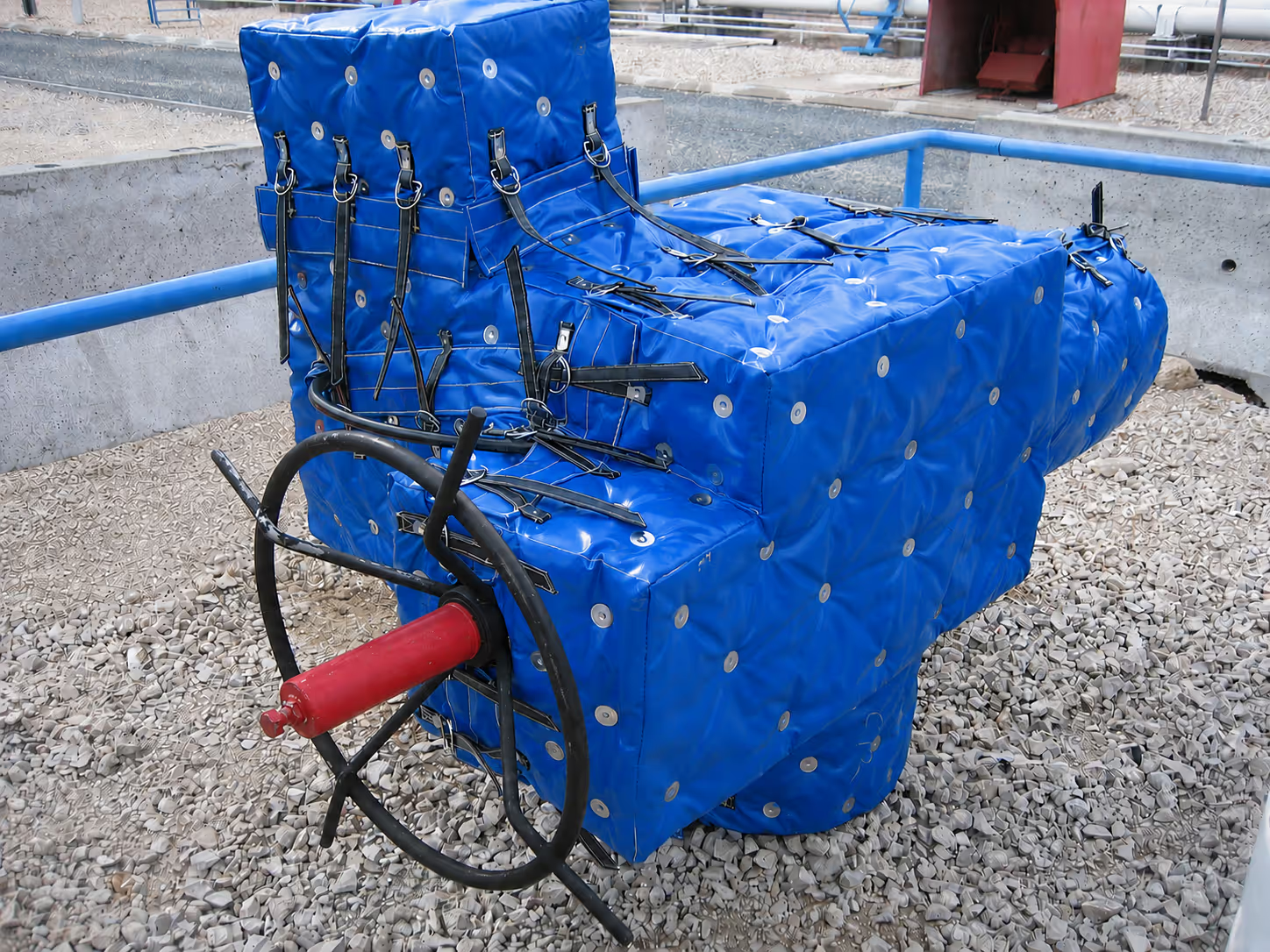
Unlike other methods, this system acts as a pre-installed physical shield. From the very first moment, its internal layers work to reduce heat transfer to the valve or actuator.
Its effectiveness lies in multi-layer engineering that combines a weather-resistant outer cover with a high-temperature insulation core, typically made of ceramic fiber. Thanks to this design, the system is capable of withstanding severe exposure, such as hydrocarbon pool fires (UL-1709) and Jet Fires (ISO 22899-1).
Depending on their technical configuration, these jackets can endure exposure temperatures exceeding 1000°C in fire conditions. During this critical scenario, the system maintains the thermal integrity of the protected equipment, keeping its internal temperature below operating limits (usually 200°C) for 30, 60, or up to 120 minutes.
In practice, both systems can fulfill their function if properly selected and applied. The difference usually lies in the type of asset and how accessible or critical it is for daily operations.
Day-to-Day Operations: Equipment Maintenance, Access, and Personnel Efficiency
In the daily operation of an Oil & Gas facility, the fire protection of valves and actuators is evaluated both in the field and through its supporting documentation. Visual inspections are conducted on a monthly or quarterly basis, while preventive maintenance and verification of fire insulation integrity are typically performed annually, generally during scheduled shutdowns.
Critical valves and actuators undergo functional testing every 6 to 12 months to ensure that the insulation does not hinder their performance under emergency conditions. The entire system must remain aligned with standards such as UL-1709 and Jet Fire scenarios, backed by test reports, technical datasheets, and full traceability. A proper design does more than just protect the asset; it facilitates access, reduces personnel intervention times, and ensures compliance during HSE and corporate audits.
Gaining access typically involves breaking the protective coating and subsequently restoring it. While it works well for equipment that requires minimal interaction, it becomes costly for assets that undergo frequent inspections.
One of the primary operational advantages of removable PFP jackets is the speed of field intervention.
Under normal conditions, a properly designed system can be removed or reinstalled within a range of 5 to 15 minutes per unit, depending on the geometric complexity and size of the asset.
This timeframe contrasts significantly with traditional systems, where gaining access can involve hours or even days of work, including the demolition and reapplication of the protection system.
%205.15.11%E2%80%AFp.m..avif)
The Hidden Threats: Corrosion, Moisture, and Minor Leaks
One of the biggest headaches in a plant isn't the major incident, but the problem that grows unnoticed.
It can hide corrosion or minor leaks until the damage becomes visible on the exterior. By the time it is detected, the structural integrity of the asset may already be compromised.
PFP jackets are engineered to prevent moisture buildup within the system.
This is achieved through:
- Overlap design that prevents water ingress without compromising fire protection.
- Use of materials that limit water absorption.
This approach significantly reduces the risk of Corrosion Under Insulation (CUI) and ensures that any leaks or condensation are detected early during routine inspections.
%205.16.14%E2%80%AFp.m..avif)
The Cost- Benefit of a Jacket
Most decisions are made by looking only at the initial price. However, in a plant environment, what truly matters is the cumulative cost over time.
Lower initial investment. However, every intervention involves:
- Coating removal.
- Application.
- Curing time.
- Skilled labor.
Higher initial investment. However, it is reusable across multiple maintenance cycles, optimizing operating expenses by eliminating the need for new applications after every inspection.
There is no universal answer. However, in scenarios involving 2 to 3 interventions during the asset's lifecycle, the cumulative cost of an intumescent system can equal or exceed that of a PFP jacket, with the added disadvantage of significantly longer operational downtime.
%205.17.33%E2%80%AFp.m..avif)
Quick Decision Matrix: Asset by Asset
Not all plant areas have the same requirements. Use this guide as a starting point.
%205.19.03%E2%80%AFp.m..avif)
Conclusion: The Vital Role of Passive Fire Protection Jackets in Petrochemicals
In high-risk petrochemical environments, passive fire protection (PFP) jackets are a critical line of defense for safeguarding valves, actuators, piping, and other vital equipment against extreme heat and exposure to hydrocarbon and jet fires. Unlike rigid enclosures or covers, PFP jackets are custom-designed, removable insulation systems that provide certified mitigation while preserving access for routine maintenance, inspection, and operation, making them especially well-suited to the dynamic needs of refineries and petrochemical facilities.
Designed with weather-resistant exteriors and high-temperature ceramic fiber cores, PFP jackets offer robust performance in demanding industrial environments and meet stringent standards such as UL-1709 and ISO 22899-1 for fire resistance and explosion overpressure. Their lightweight, modular construction ensures ease of installation and removal, supporting operational uptime during maintenance cycles.
Ultimately, integrating passive fire protection jackets into a refinery's risk mitigation strategy improves personnel safety, asset resilience, and regulatory compliance, while also ensuring continued accessibility and reliability in severe fire scenarios.
About NPC
For over 35 years, NUTEC Protective Concepts has provided certified protection for the industry’s most critical assets. We go beyond traditional methods by integrating advanced 3D scanning and digital modeling, eliminating human error to guarantee that every PFP system conforms to the exact geometry of your assets. This "perfect fit" guarantee eliminates thermal bypass and ensures regulatory compliance across every square inch.
Our infrastructure matches our engineering precision. Operating from our 25,000-square-foot manufacturing center in the Tomball Business & Technology Park, NPC is built for speed and scalability. With CNC-enabled production lines and high-volume capacity, we deliver unmatched quality for large-scale projects across North Houston and beyond.
Don't Guess. Compare it in Your Plant.
Every refinery, every terminal, and every critical line is different. The best decision doesn't come from a catalog; it comes from your numbers, your downtime schedules, and your operational priorities.
Want a cost and operational comparison for your specific assets? Schedule a 30-minute technical review with an NPC engineer and receive a customized matrix tailored specifically for your facility.